
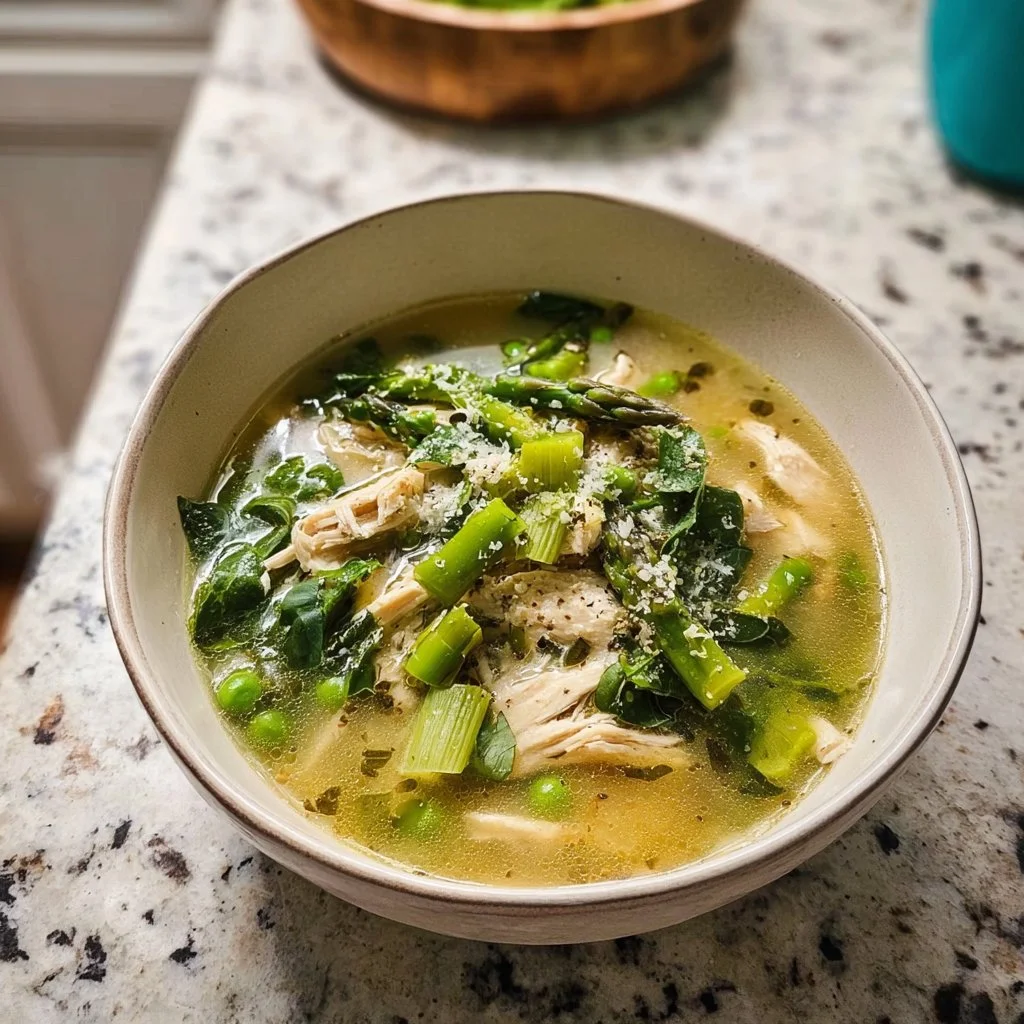
Spring Green Soup with Chicken
Bright Spring Green Bowl
INTRODUCTION
Weeknight cooking should be warm, simple, and dependable, built for real kitchens and busy lives. This Spring Green Soup with Chicken started as a quick, nourishing idea that fits right into that routine. Instructions are pared down so Spring Green Soup with Chicken comes together without fuss, using pantry-friendly ingredients you trust. Each simmer and stir proves flavor and ease can coexist, and Spring Green Soup with Chicken soon becomes a regular dinner. For another comforting bowl, try white lasagna soup with chicken and veggies some evening. It invites easy gatherings, full bowls, and bright, seasonal flavor every night.
Quick Recipe Overview
- Prep Time | 10 minutes
- Cook Time | 20 minutes
- Total Time | 30 minutes
- Servings | 4
- Difficulty | Easy
- Cuisine | Comfort / Seasonal
- Best Season | Spring
What Makes This Soup Sing on the Table
- Bright, fresh flavor: The spinach, peas, and asparagus give a lively green sweetness that tastes like spring in a bowl. Combined with savory chicken and aromatic garlic, every spoonful feels balanced and light.
- Comfort with a lift: This soup is cozy but never heavy, so it comforts without weighing you down. It works equally well after a long day or as a starter for a relaxed weekend dinner.
- Effortless weeknight winner: With straightforward steps and pantry-friendly ingredients, it’s designed to fit into busy routines. Minimal prep and quick simmering mean dinner is on the table fast.
- Crowd-pleasing and adaptable: It is gentle enough for picky eaters and flexible enough to change based on what you have. Use leftovers, swap greens, or blend it smooth for a different texture and it still shines.
Kitchen Staples for the Soup
- 2 cups chicken broth
- 1 cup cooked chicken, shredded
- 2 cups spinach leaves
- 1 cup asparagus, chopped
- 1 cup peas
- 1 onion, diced
- 2 cloves garlic, minced
- 2 tablespoons olive oil
- Salt and pepper to taste
- Lemon juice (optional, for serving)
Smart Ingredient Swaps and Notes
- Chicken : Use shredded rotisserie chicken or leftover roasted chicken to save time; for a vegetarian option swap in cubed tofu or cooked lentils for protein.
- Spinach : Baby spinach is tender and quick to wilt; if your spinach is older, choose fresher leaves or blanch briefly to revive texture.
- Asparagus : Trim woody ends and cut into even pieces so they cook the same; when asparagus is not in season, green beans make a fine substitute.
- Peas : Fresh peas have a sweetness that pops, but frozen peas are perfectly fine and add convenience; no need to thaw before adding to the hot broth.
Step-by-Step Cooking Guide
- In a large pot, heat olive oil over medium heat. Add diced onion and garlic, sauté until softened.
- Add asparagus and cook for a few minutes until tender.
- Pour in chicken broth and bring to a simmer.
- Add spinach and peas, cooking until the spinach is wilted.
- Stir in the cooked chicken.
- Season with salt, pepper, and lemon juice if desired.
- Blend the soup for a smooth texture or leave it chunky, as per your preference. Serve warm.
Technique notes: Use medium heat to soften the onion without browning it too much, which keeps the flavor clean and bright. If blending, cool slightly before processing and use short pulses for a silkier result or a longer blend for a completely smooth soup. For a chunkier bowl, reserve a cup of the vegetables before blending and stir them back in at the end.
Pro Techniques to Try
- Layering flavors: Start by sweating the onion slowly to develop sweet, mellow base notes that support the greens without overpowering them. Add garlic toward the end of the onion cooking so it stays aromatic but not bitter.
- Timing the greens: Add spinach last so it wilts quickly and keeps a vibrant color and fresh taste. Overcooked spinach can become dull, so watch closely and remove from heat as soon as it collapses.
- Gentle blending: If you choose to puree, blend in batches to prevent hot splatter and pressure buildup. Use an immersion blender for easy cleanup and to leave texture if desired.
- Adjusting seasoning: Taste at the end and add salt gradually; a squeeze of lemon brightens the whole bowl and sharpens the flavors without needing heavy salt.
Flavor Variations to Explore
- Vegan green broth: Replace chicken and chicken broth with vegetable stock and add firm tofu or cooked lentils for protein. Boost umami with a splash of soy sauce or a tablespoon of nutritional yeast for a savory finish.
- Milder, creamy version: Stir in a splash of cream or coconut milk after blending for a silky texture and gentle richness. This softens the greens’ green bite and makes the soup feel indulgent while remaining light.
- Spicy spring kick: Add a pinch of red pepper flakes when sautéing the garlic or finish each bowl with a drizzle of chili oil. The heat pairs beautifully with lemon brightness and tender vegetables.
- Regional herb twist: Fold in chopped dill or tarragon at the end for a European touch, or try cilantro and a touch of cumin for a fresher, slightly earthy profile that leans Mediterranean.
Perfect Sides and Drinks to Serve
- Sides: Toasted sourdough or crusty baguette for dipping; a simple green salad with a lemon vinaigrette to echo the soup’s brightness. A warm buttered roll keeps the meal homey and satisfying.
- Drinks: A light herbal tea or sparkling water with lemon complements the soup’s freshness; for a more substantial pairing choose a crisp white wine replacement like sparkling water with a splash of pomegranate juice. Avoid heavy beverages that mask the delicate green flavors.
- Desserts: Finish with lemon yogurt panna cotta or honey-sweetened ricotta with fresh berries to keep the meal airy and seasonal. Little bites of citrus help cleanse the palate after the savory bowl.
Make-Ahead and Freezing Notes
- Prep: Chop the vegetables and shred the chicken ahead of time and store them separately in airtight containers for up to 24 hours. Assemble and cook the soup when ready to maintain the best texture and color.
- Store: Refrigerate leftovers in sealed containers and eat within 3 to 4 days for peak freshness. Keep the soup chilled promptly to preserve flavor and prevent spoilage.
- Freeze: Cool completely, then freeze in portioned containers for up to 3 months. Leave a little headspace to allow for expansion and thaw overnight in the refrigerator before reheating.
- Reheat: Thaw in the fridge if frozen, then reheat gently on the stovetop over low to medium heat to protect texture; add a splash of broth or water if it thickens too much during storage.
Serving and Presentation Ideas
- Plating: Serve in shallow bowls to show off the vibrant green color and add a swirl of olive oil or a dollop of plain yogurt on top for contrast. Scatter thinly sliced asparagus tips or a few whole peas for visual charm.
- Garnishes: Finish with lemon zest, a few torn spinach leaves, or chopped herbs to add aroma and a fresh pop. Toasted seeds like pumpkin or sunflower add crunch and a nutty balance.
- Cozy vibes: Present bowls on warm chargers or wooden boards and include small ramekins of extra lemon wedges and crushed pepper for diners to personalize. A glowing candle and fresh bread make the meal feel intentionally welcoming.
Little Kitchen Secrets That Elevate It
- Salt early and taste later: Season gently during cooking and adjust at the end so the vegetables and broth can reveal their true balance. A final pinch of salt and lemon can transform the whole pot.
- Use good broth: A flavorful chicken broth is the backbone; homemade or a high-quality store-bought version makes a noticeable difference. If salt levels vary, compensate accordingly when seasoning.
- Texture balance: Reserve some vegetables before blending to add back for bite and interest. Alternately, pulse blend to keep delightful flecks of green rather than a uniform puree.
- Fresh finish: Lemon juice or zest added at the end keeps the flavors bright and prevents the greens from tasting flat. Fresh herbs folded in right before serving provide an aromatic lift that canned or dried herbs cannot match.
Keeping and Reheating Tips for Best Texture
- Microwave: Reheat single portions in short 45-second bursts, stirring between intervals to distribute heat evenly and prevent hot spots. Add a teaspoon of water or broth if it looks too thick.
- Stovetop: Warm gently over low to medium heat, stirring occasionally until steaming; this slows reheating and preserves the soup’s texture. If the soup tightens up after refrigeration, loosen with a splash of warm broth.
- Texture preservation: Avoid boiling when reheating, as furious bubbles can break down green pigments and create a dull appearance. If you blended the soup originally, stir in reserved fresh leaves at the end to revive color and freshness.
Soup Questions Answered
How long will this soup keep in the fridge?
Stored in an airtight container, the soup keeps for three to four days. The chicken and vegetables stay safe and tasty within this window when refrigerated promptly. Always reheat to steaming hot before serving to ensure food safety.
Can I freeze this soup and what changes after thawing?
Yes, freeze in meal-sized portions for up to three months. The texture of the greens may soften slightly after thawing, so consider blending before freezing or stirring in fresh greens when reheating to restore brightness.
What is the best way to shred cooked chicken quickly?
Use two forks to pull apart warm chicken, or pulse briefly in a food processor for just a second or two. Avoid over-processing which can turn the chicken into a paste.
Can I make this soup vegetarian or vegan?
Substitute vegetable broth and use cubed tofu or cooked lentils for protein to make it vegan-friendly. Taste and adjust seasonings, and consider adding a pinch of salt and a drizzle of olive oil for richness that offsets the missing chicken.
How do I thicken the soup if I prefer a heartier texture?
Simmer longer to reduce the broth slightly, or blend a portion and return it to the pot for natural thickening. A spoonful of mashed potatoes or cooked white beans stirred in can also add body without changing flavor drastically.
Is it safe to use frozen asparagus and peas?
Yes, frozen vegetables are safe and convenient; add them a little earlier if they are frozen solid so they have time to come to temperature. Frozen peas especially retain sweetness and texture well in soups.
Nutrition Info
- Serving Size | 1 bowl (about 1 1/2 cups)
- Calories | 230
- Protein | 22 g
- Carbs | 12 g
- Fat | 9 g
- Fiber | 3 g
- Sugar | 4 g
Nutrition facts are estimates and may vary.
A Warm Note from the Kitchen
This soup is about more than ingredients; it is a reminder that simple, thoughtful food can carry a lot of meaning. When greens and chicken meet in a simmering pot, the result is both nourishing and familiar, the kind of dish that threads through seasons and households. It celebrates practical cooking where family, flavor, and resourcefulness meet. Serve it at a casual dinner or tuck it into your weeknight rotation and notice how easily it becomes comfort that is both light and sustaining.
Final Invitation to Cook
If you are looking for a bowl that feels like spring and cooks up in a hurry, the Spring Green Soup with Chicken is ready to answer. Invite friends or family, share a photo, and pin this recipe to keep as a reliable, fresh favorite. Enjoy the process, savor the bright flavors, and come back to experiment with variations that suit your table.
Spring Green Soup with Chicken
Ingredients
Method
- In a large pot, heat olive oil over medium heat. Add diced onion and garlic, sauté until softened.
- Add asparagus and cook for a few minutes until tender.
- Pour in chicken broth and bring to a simmer.
- Add spinach and peas, cooking until the spinach is wilted.
- Stir in the cooked chicken.
- Season with salt, pepper, and lemon juice if desired.
- Blend the soup for a smooth texture or leave it chunky, as per your preference. Serve warm.