
Quick & Easy Baked Lemon Garlic Salmon
Zesty Lemon Garlic Fillets
INTRODUCTION
Small kitchens, full schedules, and the joy of a simple dinner inspired this approach to home cooking. This recipe for Baked Lemon Garlic Salmon is built to be comforting and reliable, not fussy, and it fits busy weeknights as easily as a slow Sunday. Each test focused on clarity so the Baked Lemon Garlic Salmon cooks right the first time and every time after. The aim is warmth and confidence at the table, so this Baked Lemon Garlic Salmon feels familiar, stress-free, and ready to share with friends. For another quick family favorite, try garlic butter chicken asparagus recipe.
Quick Recipe Overview
- Prep Time: 10 minutes | Cook Time: 15–20 minutes | Total Time: 25–30 minutes
- Servings: 4 | Difficulty: Easy | Cuisine: Home-style modern coastal
- Best Season: Year-round with a bright spring and summer feel
Why This Salmon Shines for Any Night
- Bright and fresh flavors: The lemon and garlic bring lively citrus notes that brighten the natural richness of the fish. This makes the baked lemon garlic salmon feel light and satisfying at the same time.
- Effortless weeknight cooking: Minimal prep and a single pan make dinner fast and approachable for busy evenings. You can prep the sauce while the oven heats and be finished before the dishes pile up.
- Crowd-pleasing and versatile: This dish works for casual family dinners or a slightly dressed-up weeknight celebration. Add a quick salad and roasted vegetables and it becomes a complete meal.
- Reliable texture every time: Baking at a steady temperature keeps the salmon moist and tender while letting the top develop a gentle, buttery finish. Even cooks new to fish will find the instructions easy to follow.
What You Need to Gather
- 4 salmon fillets, skin removed (about 24oz (680g) total)
- 2 Tablespoons (28g) unsalted butter
- 2 Tablespoons (30ml) olive oil
- 3 garlic cloves, minced
- 1/4 cup (60ml) freshly squeezed lemon juice
- 2 Tablespoons chopped fresh parsley (or 2 teaspoons dried)
- 1 Tablespoon chopped fresh dill (or 1 teaspoon dried)
- 1/2 teaspoon flaky sea salt
- 1/4 teaspoon freshly ground black pepper
- optional: 4 lemon slices and extra herbs, for topping
Smart Ingredient Notes
- Salmon : Look for firm, bright fillets without a fishy odor; Atlantic or wild-caught varieties both work. If buying frozen, thaw gently in the refrigerator overnight for the best texture.
- Butter : Unsalted butter lets you control seasoning and gives a silky finish. For a dairy-free swap, use vegan butter or more olive oil for a similar mouthfeel.
- Olive oil : Use extra virgin for flavor when finishing, but regular olive oil tolerates higher heat. Olive oil also helps the garlic bloom gently in the skillet.
- Garlic : Fresh minced garlic is aromatic and bold; avoid pre-minced jars for the freshest flavor. If garlic is strong, cook slightly longer in the butter and oil to mellow the bite.
- Lemon juice : Fresh-squeezed lemon juice brightens the sauce in ways bottled lemon cannot fully replicate. If fresh lemons are unavailable, use a splash of apple cider vinegar for acidity.
- Herbs : Fresh parsley and dill add brightness and a light green aroma; dry herbs work in a pinch but use less. Save extra herbs to sprinkle after baking for a lively finish.
Step-by-Step Baking Instructions
- Preheat oven to 400°F (204°C).
- Line a rimmed baking sheet with parchment paper, aluminum foil, or a silicone baking mat. If using aluminum foil, brush lightly with olive oil.
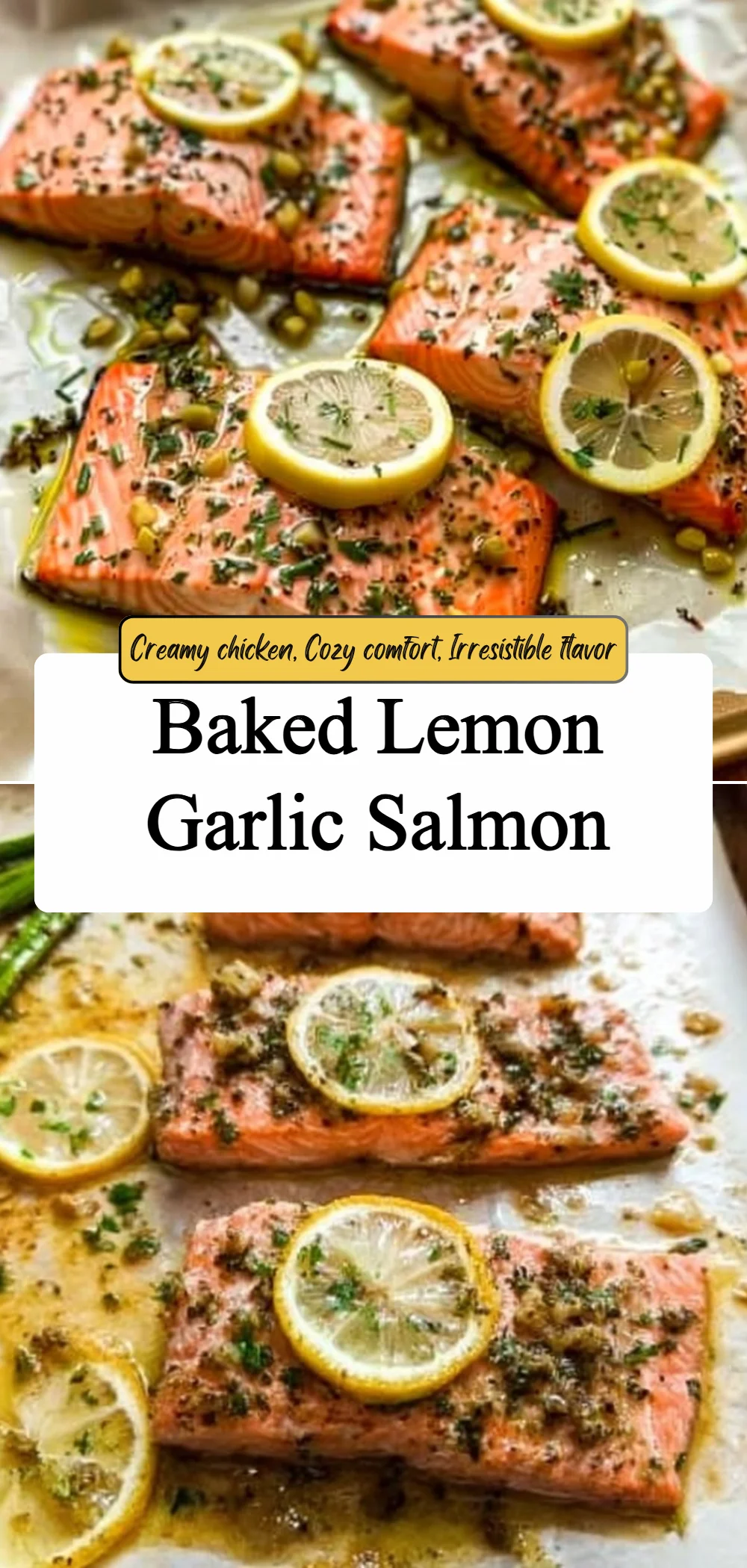
- Arrange salmon fillets evenly spaced in the middle of the pan. If also roasting vegetables, arrange them around the perimeter of the pan, as pictured above.
- In a small saucepan or skillet over medium heat, melt the butter with the olive oil. Add the garlic and cook for 1 minute, until fragrant.
- Remove from heat and stir in the lemon juice, herbs, salt, and pepper.
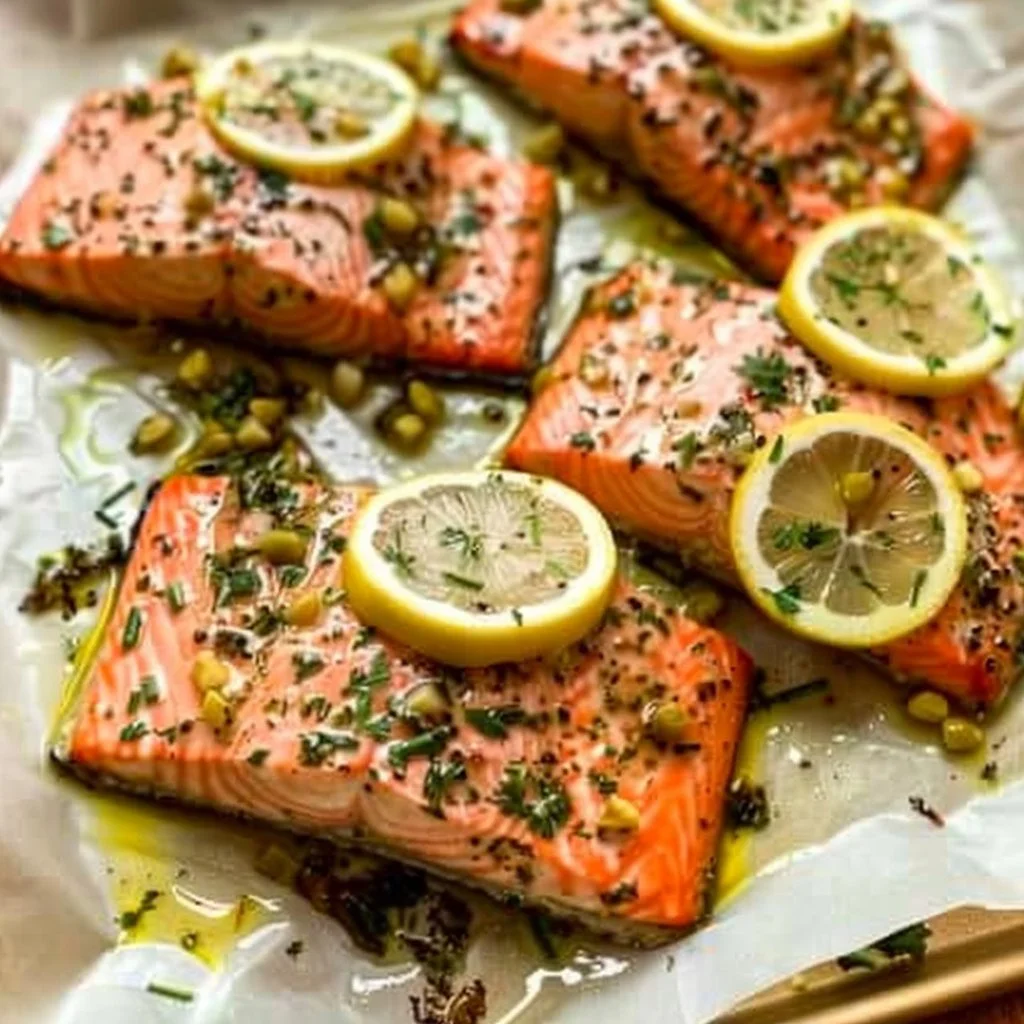
- Spoon mixture evenly over the salmon fillets (and vegetables, if using). If desired, place a lemon slice on top of each salmon fillet.
- Bake for 15–20 minutes, depending on salmon thickness (about 10 minutes per 1-inch thickness measured from the thickest part of the fillet). Salmon should be opaque and flake easily with a fork; if you want to check it with an instant-read thermometer, internal temperature should reach 145°F (63°C).
- Serve warm. Store leftovers tightly covered in the refrigerator for up to 3 days.
Technique notes: Let the butter and garlic warm enough to release aroma but not brown quickly; that gentle cooking keeps the sauce bright. When checking doneness, probe at the thickest part of the fillet and look for a gentle flake rather than crumbling.
Pro-Level Baking Pointers
- Timing matters: Thicker fillets need a few more minutes, while thin pieces may be done in 12 minutes. To avoid overcooking, start checking at 12 minutes and trust visual cues along with an instant-read thermometer.
- Layer flavors: Spoon the warm garlic-lemon butter over the fish right before baking so the citrus remains fresh. A second drizzle after baking can enhance the bright finish.
- Rest before serving: Let the salmon rest 2 to 3 minutes after coming out of the oven to redistribute juices. This step keeps the fillet tender and prevents the sauce from sliding off when plated.
- Herb heatproofing: Add delicate herbs like parsley after baking to preserve color and aroma. Dried herbs can be mixed into the butter beforehand to bloom during the brief cooking.
Flavor Variations to Try
- Vegan twist: Swap salmon for thick slices of roasted king oyster mushrooms or marinated tofu; use vegan butter or olive oil and finish with lemon and fresh dill. Roast until edges caramelize and the pieces hold shape for a savory plant-based option.
- Mild Mediterranean: Add a touch of sun-dried tomatoes and capers to the lemon garlic topping, and finish with a sprinkle of toasted pine nuts. The result leans aromatic and slightly briny without overpowering the fish.
- Spicy citrus: Stir in crushed red pepper flakes or a pinch of cayenne to the garlic butter, and zest an extra lemon over the top before serving. This yields a bright, peppery kick that wakes up the palate.
- Regional herb swap: Replace dill with cilantro and add ground cumin for a subtle Latin twist, or use rosemary and thyme for heartier, rustic notes. Small swaps create distinct personality without changing method.
Perfect Sides and Sips
- Sides: Serve with steamed baby potatoes, lemony couscous, or a crunchy green salad tossed in a light vinaigrette. Roasted asparagus or broccolini positioned around the salmon bake at the same time for an easy one-pan meal.
- Drink pairings: A crisp sparkling water with lemon or a chilled non-alcoholic white grape spritzer complements the citrus. For a richer sip, a light iced tea with mint balances the buttery flavors.
- Dessert ideas: Finish with a simple lemon sorbet, honey yogurt with fresh berries, or almond biscotti for a light and refreshing end to the meal.
Make-Ahead and Prep Tricks
- Prep: Mix the garlic-lemon butter up to a day ahead and store it covered in the refrigerator. Bring it to room temperature before spooning over the fillets so it spreads easily.
- Store: Raw fillets can be seasoned and kept covered in the fridge for up to 24 hours before baking, which deepens flavor and saves time on cook day.
- Freeze: For longer storage, flash-freeze individual fillets on a tray, then transfer to a freezer-safe bag for up to three months. Thaw overnight in the refrigerator for best texture.
- Reheat: Reheat gently at 275°F (135°C) until warm throughout to preserve moisture, or use a low-boil-in-bag method with warm water for just a few minutes.
Presenting Your Salmon for Company
- Plating: Place the fillet slightly off-center on a wide plate, spoon a little of the pan juices alongside, and tuck herbs under and over the fish for height. A lemon slice angled against the fillet adds an elegant, fresh touch.
- Vibe: Use warm white plates and natural textures like wooden boards or linen napkins to underline the homey, coastal comfort of the dish. Soft lighting and simple garnishes keep the focus on the salmon’s color and aroma.
- Portioning: Serve with a small wedge of lemon for squeezing at the table and a scattering of extra chopped parsley to refresh the palate. Individual herb sprigs make the presentation feel intentional and hospitable.
Little Kitchen Secrets That Elevate It
- Room temperature fillets cook more evenly: Take fish out of the fridge 15 minutes before baking so the center warms slightly and bakes at the same rate as the edges. Cold fish can overcook on the outside before the center reaches proper temperature.
- Use a rimmed sheet pan for easier cleanup and to catch juices: Parchment or a silicone mat prevents sticking and helps the butter pool evenly under the salmon. If using foil, a light brush of oil prevents the sauce from gluing to the surface.
- Finish with fresh acid: A bright squeeze of lemon just before serving lifts the whole plate and balances butteriness without adding extra fat. Fresh acidity is the secret to making rich dishes feel light and lively.
- Tiny herb garnish makes a difference: Scatter just a teaspoon of chopped fresh herbs per serving to add aroma and color without overwhelming the fish. The visual contrast makes the dish feel restaurant-ready.
How to Store and Reheat Without Losing Texture
- Refrigerator storage: Cool leftovers to room temperature no more than two hours after cooking, then transfer to an airtight container and refrigerate for up to three days. Keep the sauce separate when possible to prevent sogginess.
- Microwave reheating: Cover the fillet loosely and reheat at 50 percent power in 30-second bursts to avoid rubbery texture. Add a splash of water or lemon juice to restore moisture.
- Stovetop reheating: Gently warm in a nonstick skillet over low heat with a teaspoon of olive oil or a splash of water, covering briefly to trap steam. This keeps the exterior tender and prevents drying.
Common Questions Answered
How do I know when the salmon is done?
Salmon is done when it turns opaque and flakes easily with a fork, typically 10 minutes per inch of thickness at 400°F. For precise results, an instant-read thermometer should read 145°F (63°C) at the thickest part. Remove it a couple of degrees earlier if you prefer a slightly more tender finish and let carryover heat finish cooking.
Can I use frozen salmon for this recipe?
Yes, frozen salmon can be used if thawed fully in the refrigerator first for best texture. If baking from frozen, increase the cook time and check for doneness frequently to avoid uneven cooking. Pat the fillets dry before topping so the sauce adheres well.
What if I do not have fresh herbs?
Dried herbs work in a pinch; use about one-third the amount called for fresh and add them to the butter while warming so they can rehydrate and release flavor. Finish with a small pinch of dried herb after baking if you like. Fresh herbs remain preferable for brightness and color.
Can I make this without butter?
Yes, swap the butter for extra olive oil or a plant-based butter alternative. The dish will still be rich and flavorful, though the mouthfeel may be slightly lighter without dairy-based butter. Adjust seasoning to taste since oil disperses flavor differently.
Is it safe to eat salmon slightly under 145°F?
Many cooks prefer salmon a touch below 145°F for a moister texture, but official food safety guidelines recommend 145°F for complete doneness. If you choose a lower finish, source high-quality fish and handle it carefully to reduce risk.
How can I add vegetables to the same pan?
Place vegetables like asparagus, baby potatoes, or cherry tomatoes around the salmon on the rimmed sheet so they roast at the same time. Cut vegetables into uniform sizes and toss them in a little oil and salt so they cook evenly while the salmon bakes.
Nutrition Info
- Serving Size: 1 fillet (approximate)
- Calories: 420 kcal
- Protein: 32 g
- Carbs: 2 g
- Fat: 30 g
- Fiber: 0 g
- Sugar: 0 g
Nutrition facts are estimates and may vary.
A Note from the Kitchen
Cooking this baked lemon garlic salmon is a gentle reminder that simple ingredients handled with care can create comforting food that brings people together. The bright lemon, savory garlic, and fresh herbs connect moments across family tables and communal meals. There is a small ritual in preparing a reliable dish that everyone can enjoy and return to again and again, and that rhythm of sharing makes ordinary dinners feel meaningful. Let this recipe be one of those dependable recipes that welcomes conversation and warmth.
Ready to Bake and Share
This baked lemon garlic salmon is designed to be approachable, flavorful, and easy to pin for later. Invite friends, set the table, and enjoy the bright citrus and buttery garlic notes together; cook it, share it, and pin it so it’s ready for your next cozy night in.
Baked Lemon Garlic Salmon
Ingredients
Method
- Preheat oven to 400°F (204°C).
- Line a rimmed baking sheet with parchment paper, aluminum foil, or a silicone baking mat.
- Arrange salmon fillets evenly spaced in the middle of the pan.
- In a small saucepan over medium heat, melt the butter with the olive oil and add garlic, cooking for 1 minute until fragrant.
- Remove from heat, stir in lemon juice, herbs, salt, and pepper.
- Spoon mixture evenly over salmon fillets and place a lemon slice on top if desired.
- Bake for 15-20 minutes, until salmon is opaque and flakes easily. The internal temperature should reach 145°F (63°C).
- Serve warm.